
When did you last go anywhere without your cell phone? From maps and weather apps to social media platforms, we give consent for our phones to trace our footsteps and behavior. These curated mobility data are often used for personalized advertisements.
Scientists suggest using mobile device location data for studying human-wildlife interactions retrieved 26 April 2024 from https://phys.org/news/2024-04-scientists-mobile-device-human-wildlife.html This document is subject to copyright.
Apart from any fair dealing for the purpose of private study or research, no part may be reproduced without the written permission. The content is provided for information purposes only.1 hour agoUse this form if you have come across a typo, inaccuracy or would like to send an edit request for the content on this page. For general inquiries, please use ourThank you for taking time to provide your feedback to the editors. Your feedback is important to us. However, we do not guarantee individual replies due to the high volume of messages.to let the recipient know who sent the email. Neither your address nor the recipient's address will be used for any other purpose. The information you enter will appear in your e-mail message and is not retained by Phys.org in any form.Get weekly and/or daily updates delivered to your inbox. You can unsubscribe at any time and we'll never share your details to third parties.
Physics News Science News Technology News Physics Materials Nanotech Technology Science
Deutschland Neuesten Nachrichten, Deutschland Schlagzeilen
Similar News:Sie können auch ähnliche Nachrichten wie diese lesen, die wir aus anderen Nachrichtenquellen gesammelt haben.
 When an antibiotic fails: Scientists are using AI to target 'sleeper' bacteriaSince the 1970s, modern antibiotic discovery has been experiencing a lull. Now the World Health Organization has declared the antimicrobial resistance crisis as one of the top 10 global public health threats.
Weiterlesen »
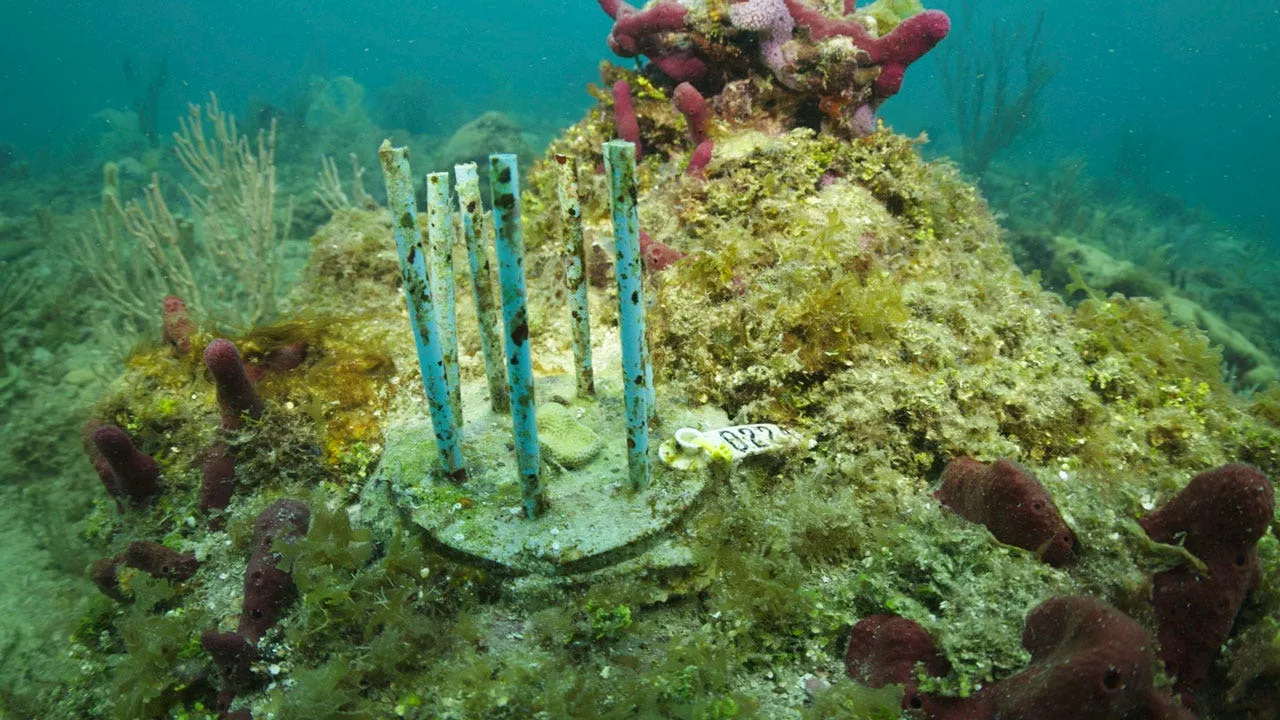 Florida scientists save baby coral from predators using boba strawsScientists in Florida have created a 'Coral Fort' from biodegradable drinking straws that can protect lab-grown coral from predators after it is transplanted into the wild.
Weiterlesen »
 In a first, scientists measure qubits using infrared sensorsThe conventional method of detecting qubits is not scalable. However, with 'nanobolometers' scientists can achieve a single-shot qubit reading.
Weiterlesen »
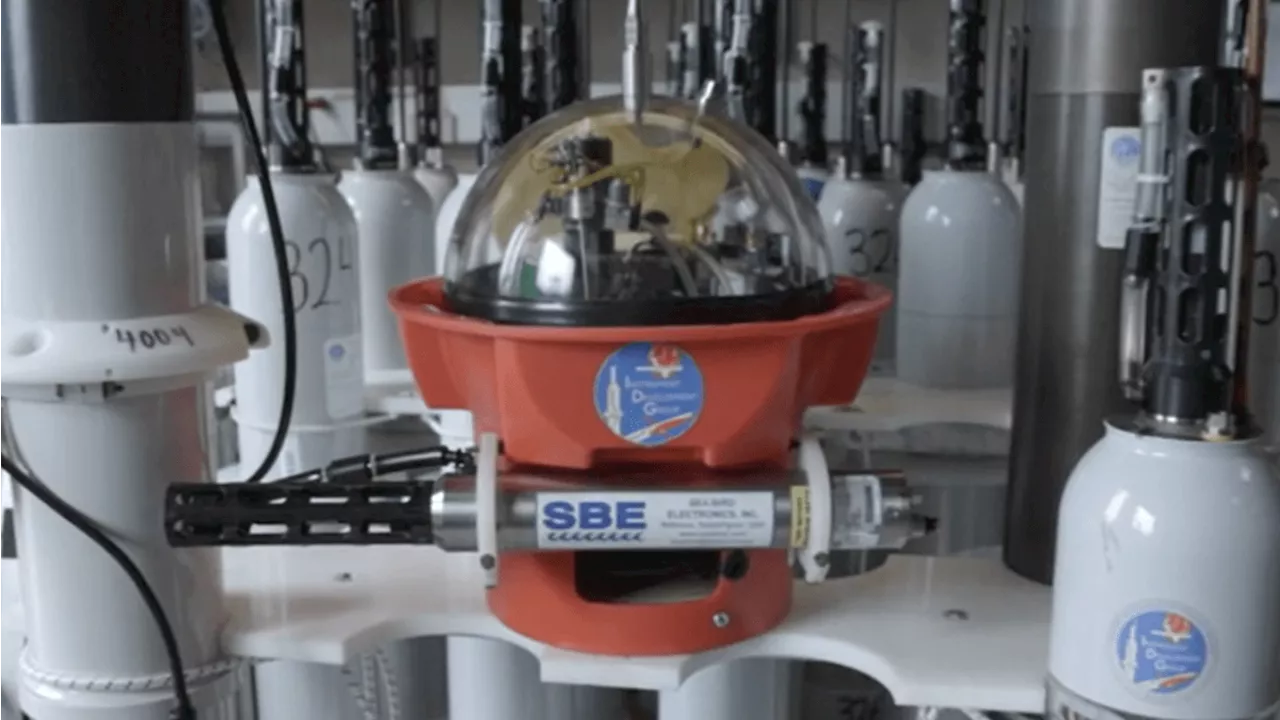 Scripps scientists at UC San Diego using robots to track climate change's impact on oceansUnderwater robots may be a key to understanding how the climate is changing and how our sea levels are rising. This year might be a preview of what the future…
Weiterlesen »
 Scientists develop most powerful ultraviolet laser using LBO crystalsDUV lasers have a wide area of applications already. The ability to deliver lasers with variable power output will open new avenues.
Weiterlesen »
 Scientists simulate magnetization reversal of Nd-Fe-B magnets using large-scale finite element modelsNIMS has succeeded in simulating the magnetization reversal of Nd-Fe-B magnets using large-scale finite element models constructed based on tomographic data obtained by electron microscopy.
Weiterlesen »